

Strength Is the Most Misunderstood Card in Tarot
Why being called "strong" isn't always a compliment.

Nobody likes being called weak. That can be one of the worst insults to anyone. However, I think a lot of people are getting tired of being labeled as strong, too.
I mean, it’s not that being strong is a bad thing. It’s just that sometimes that label comes with a lot of pressure. So let’s discuss this a little more because this is one of those highly important discussions to have.
The Compliment That Doesn't Feel Like One
When tough times hit, some people not only get through but come out even stronger. They get called “strong.” Someone might be carrying a load that’s so heavy it feels impossible to handle. They’re seen as strong.
Someone else could be pushing through years of relentless struggle—like taking care of a sick loved one, dealing with deep sadness, fighting trauma, handling health issues, or just coping with life’s constant ups and downs. They’re labeled as strong.
While the intention behind calling someone strong often comes from a place of admiration, it can feel a bit empty too. There’s something left unsaid. What people really mean is:
“I’m amazed by how you endure such tough situations.”
But what rarely gets said is:
“You shouldn’t have to deal with all of this in the first place.”
Strength Isn't the Same as Choice
The Strength card is often misunderstood. When people look at its imagery, they might think about:
Tough power.
Rock-solid confidence.
Total control.
Steadfast resilience.
While those qualities do fit the card’s meaning, real strength is about so much more. It’s not just about choosing to be strong or trying hard in tough times. Sometimes, strength quietly shows up as a steady force when all other options are gone. It’s about facing life’s challenges head-on when the easy paths have disappeared.
You don’t just develop strength by looking for it; you discover it when life pushes you to your limits, making you find the courage and determination to get through the chaos.
The Burden of Being the Strong One
In just about every family, there’s usually that one person everyone depends on. At work, you’ll spot that one colleague who keeps everything running smoothly. In friend groups, there’s often someone who naturally takes the lead.
This is the person juggling all the details of life; they’re the rock that everyone leans on. They have this amazing drive, always pushing ahead, even when life throws tough challenges their way. But then, something weird starts to happen.
As time goes by, people begin to forget just how heavy the load is for this person. Instead, they only notice the strength and resilience they show.
Strength Can Become a Trap
This is a tough reality that often gets left unsaid.
When you come off as strong and resilient, it can make people think you’re invincible. The more capable and confident others see you, the less likely they are to reach out and see how you’re really doing. Instead of offering a hand, they assume you’ve got it all under control, leaving you to deal with your struggles on your own.
As you build up your inner strength, it creates a hidden burden. With every win and show of toughness, more responsibilities quietly pile up, becoming heavier on your shoulders.
Eventually, what used to make you proud—being viewed as strong—starts to feel different. Strength goes from being a nice compliment to a heavy expectation, making you question if anyone truly sees the person behind the tough exterior.
What the Card Actually Shows
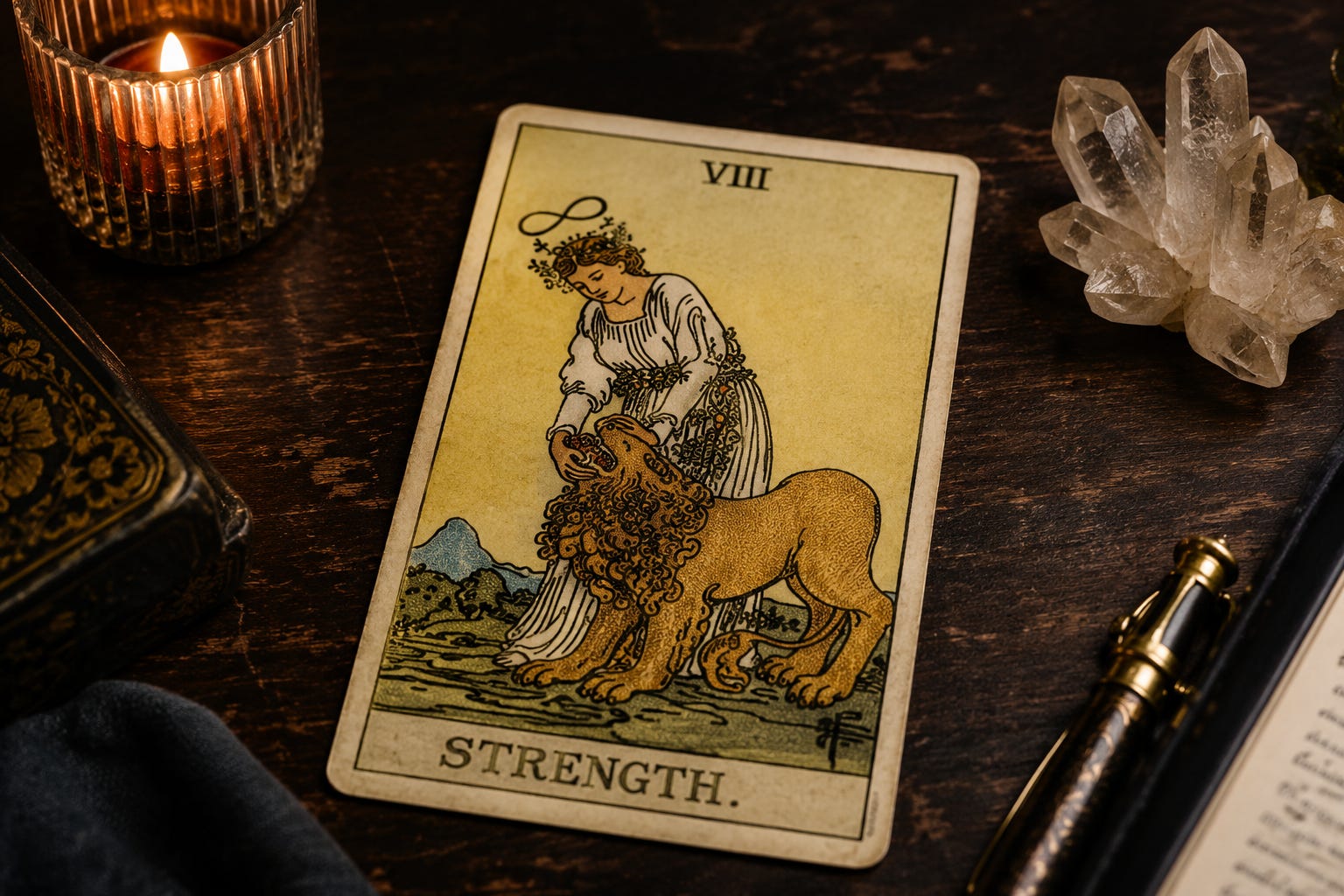
The traditional Strength card isn’t just about being in charge or dominating others. In the image, you see a figure standing next to a powerful lion, but she’s not fighting it or trying to take it down.
Instead, she’s focused on really understanding how to share space with this amazing creature. It’s not about fear or control; it’s about tackling the challenges that come with living alongside something so wild and intense.
This whole vibe shows a deeper kind of strength—one that recognizes life’s difficulties and respects its wild nature.
Survival and Strength
This idea really sticks with me and makes me think a lot. In our culture, we often celebrate survival, putting those who’ve faced tough times on a pedestal.
But in all the cheers, we rarely stop to think about what it really cost them. We seldom ask ourselves:
What did they lose for good in the process?
What did they have to sacrifice along the way?
How much they changed, often becoming someone they don’t even recognize anymore.
If they’re still carrying that tiredness long after everything’s over.
Instead, we just focus on the fact that they survived, which is seen as a win. But survival and winning aren’t the same thing. This difference is what I’m exploring in my upcoming book, Survival Isn’t a Victory. The journey of surviving and then figuring out how to feel okay afterward is two very different stories.
The Grey Area of Strength
Strength can look pretty epic sometimes, showing off bravery and heroism. But there are other times when it’s way less glamorous—it’s messy, chaotic, and totally unpredictable.
Some days, just getting out of bed feels like a major win, fighting against that heavy weight of inertia with everything you’ve got. It can also mean having the guts to ask someone for help when the world feels like it’s crushing you.
Sometimes, it’s about admitting you’re not okay and showing the cracks in your tough exterior. Other times, real strength is realizing you can let go of burdens that you never should have taken on in the first place.
Final Thought
The Strength card makes us think about something deeper: “What emotional baggage are you holding onto, and what’s the point of it?” Just pushing through isn’t always smart; sometimes it’s just a mask for the exhaustion we’re hiding beneath a brave face.
There comes a time when being honest matters more than pretending to be strong.
If you want to dive into these important topics—like survival, caregiving, identity, resilience, and how we view strength—check out The Grey Area Unfiltered podcast. New episodes drop every Tuesday at 12 PM ET.
Remember, not everyone who seems strong chooses that role; sometimes, life just throws strength your way when you least expect it.

Another perspective along these lines - as a person with mostly healed trauma, the feeling of pity from the “compliment”. Sure, we had to be strong…but there’s a “you poor thing” pity vibe under that makes “you’re so strong” hard to take. I hesitate to mention what happened to avoid it.
When it meet someone with trauma similar to mine, it’s a simple acknowledgement of “me too” and we move on.
Don’t say I was “so strong” with pity, it undermines what I healed/still healing. Unless I am bearing my deepest feelings, an “I hear you” is enough.